Tobias Warner, H-France Review Vol. 21 (August 2021), No. 131
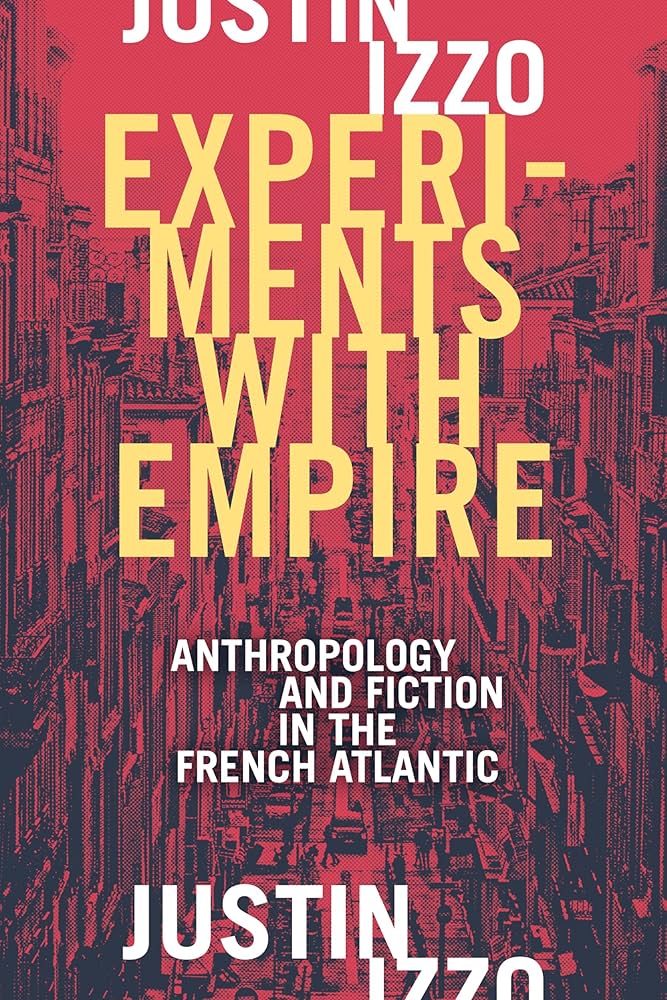
Justin Izzo’s Experiments with Empire skips from West Africa to the Caribbean to Marseille and across the twentieth century, studying writers and filmmakers who blended anthropology and fiction as a creative way to “process colonial situations and imperial afterlives” (p. 2). Looking beyond the better-known and unsavory entanglements of anthropology and colonialism, Izzo examines intellectuals across the French Atlantic who practiced a more creative, open-ended ethnography. Izzo’s focus here is on what he calls experimental anthropology (or, sometimes, ethnographic fiction). On the one hand, this mode had an epistemological remit: to “disrupt generic categories” in order to “think critically about social-scientific and literary ways of knowing the world” (p. 2). But such experimental forms of knowledge production also had a political dimension: they are said to be a “future-oriented epistemology” (p. 215) which has the potential to “project unforeseen futures” and imagine “new, postimperial political desires” (pp. 215-16). In practical terms, this means exploring syntheses of anthropology and fiction in a corpus of writers and filmmakers that includes Ahmadou Hampâté Bâ, Jean Rouch, Michel Leiris, Jacques Stephen Alexis, Patrick Chamoiseau and Jean-Claude Izzo.
 Tobias Warner